Blog
-
![]()

Bardejov, Bikur Cholim Synagogue
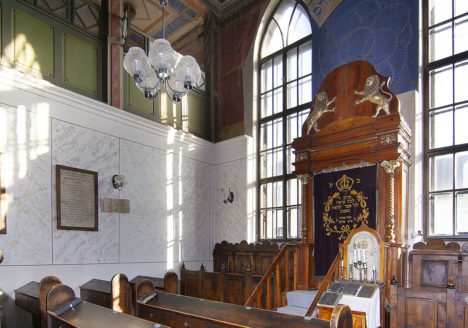
The Bikur Cholim synagogue was established 1929 by the Chevra Bikur Cholim, a Jewish charitable association. Located in the historical center and thus an integral part of the city’s UNESCO World Heritage site, it is a simple building whose street façade features two tall, pointed Gothic windows and a Hebrew inscription with the name of the association.
-
![]()
Bardejov, Old Synagogue compound
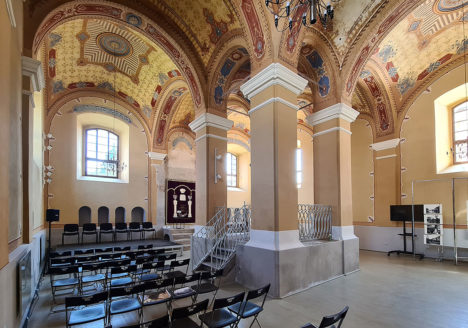
Bardejov’s most prominent site of Jewish heritage is the so-called Jewish suburb, a compound of Jewish institutional buildings just outside the town center. It includes the Old Synagogue, a beit midrash (Torah study house), several mikvaot (ritual baths), a heating plant and a water tower. The Old Synagogue (Old Shul), dating from 1836, is the compound’s earliest building. The sanctuary is a nine-bay space with a central bimah supported by four pillars and a ceiling covered with splendid ornamental decoration.
-
![Banská Štiavnica]()
Banská Štiavnica, Cemetery
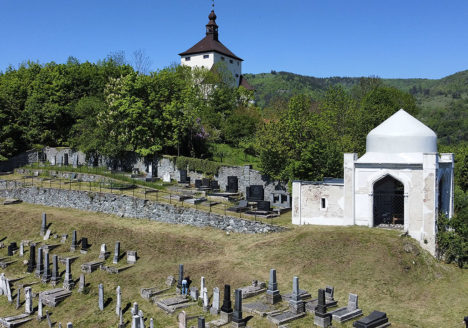
The Jewish cemetery, owned by the municipality, has undergone restoration, thanks to a civic initiative led by a local activist, Dr. Beata Nemcová. The cemetery occupies a beautiful location on a hillside above town, spread out over a descending, partially terraced slope. The tombstones are simple, reflecting the urban taste of the nineteenth and early twentieth centuries.
-
![Micromuseum of Ármin Schnitzer]()
Komárno, Micromuseum of Ármin Schnitzer
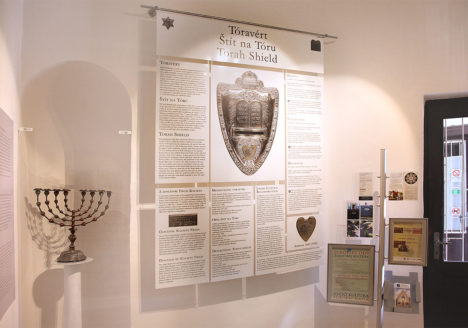
The Micromuseum of Ármin Schnitzer is a small permanent exhibition dedicated to the heritage of the Jewish community of Komárno. It is located in the Menház, a former Jewish poorhouse building, which is today the Jewish community center of Komárno.
-
![Ľudovít Feld Cultural center]()
Košice, Ľudovít Feld Cultural center
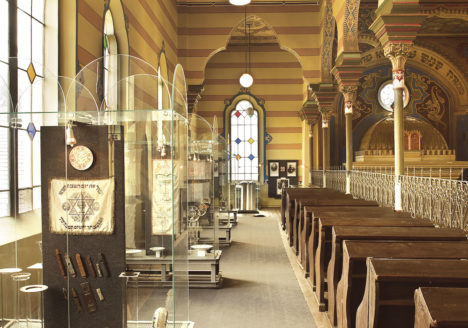
The major Jewish cultural institution in Košice was established by the local Jewish community under the guidance of Dr. Jana Teššerová in 2015. Located in the Puškinova Street synagogue in the center of town, it is dedicated to the Košice-born Jewish artist Ľudovít Feld. A skilled artist who suffered from dwarfism, he was spared death in the Auschwitz camp by the notorious Nazi criminal Dr. Josef Mengele, who assigned him to document his horrendous experiments by means of drawings.
-
![]()
Žilina, Judaica exhibition
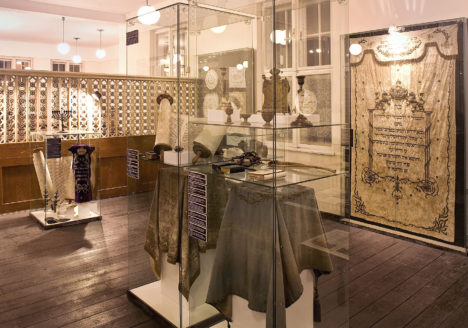
The Jewish Community of Žilina has a precious Judaica collection, which is material evidence of the rich Jewish communal life of Žilina, Bytča, Varín and other towns in this region of north-western Slovakia. The collection is exhibited in the synagogue, which was built in 1927 for the local Orthodox community. A mikvah used to be located in the basement of the building.
-
![]()
Prešov, Judaica exhibition
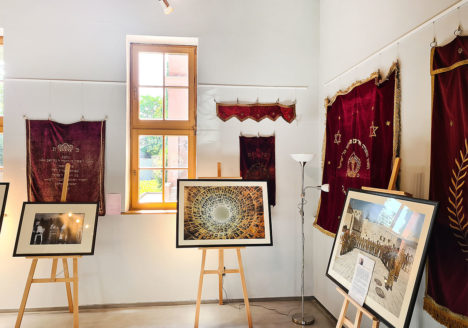
The first Jewish Museum in Slovakia was established in Prešov in 1928, and operated until World War II. Organized by the Jewish Museum Association and presided by Engineer Eugen Bárkány, the museum assembled a unique Judaica collection predominantly from the region of eastern Slovakia. In 1952, the collection was deposited at the State Jewish Museum in Prague, from where it was returned to the Jewish Community of Prešov in 1993.
-
![Museum of Jewish Culture]()
Bratislava, Museum of Jewish Culture
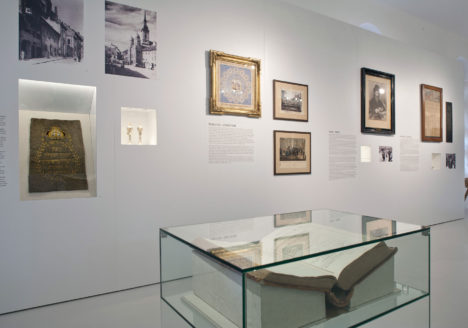
The Museum of Jewish Culture, which is a branch of the Slovak National Museum, is a prominent state-run institution focusing on Jewish heritage. Located in the Zsigray Mansion, a surviving house of Bratislava’s former Judengasse (Jewish Street), the Museum of Jewish Culture is the only reminder of the historic Jewish neighborhood, which was razed in the 1960s when the SNP Bridge was constructed.
-
![Jewish Community Museum]()
Bratislava, Jewish Community Museum
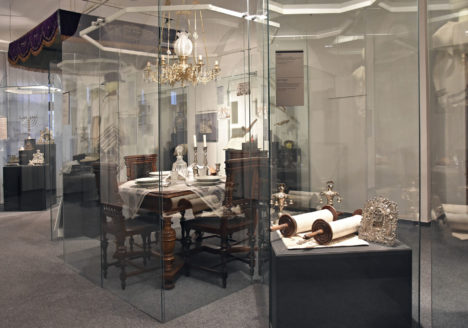
The Jewish Community Museum was established by the Jewish Community of Bratislava in 2012. Its permanent exhibition, located in the former women’s gallery in the Heydukova Street synagogue, is accessible during the exhibition season from early June to early October. The exhibition, curated by Jana Švantnerová and Maroš Borský, tells the story of the Jews of Bratislava.